


WHO WE ARE
Finding solutions for Africa
Africa’s time is now – we are ready and willing to make our mark
ABOUT US
The University of Limpopo (UL), which was established with a college status in 1959, has transformed into one of Africa’s most innovative universities, offering highly competitive and industry-relevant qualifications.
Our Programme Qualification Mix (PQM) responds to the developmental needs of communities and epitomises academic excellence and innovativeness.
Popularly known as Turfloop, UL was the first institution in South Africa to establish a medical school since the advent of democracy. It eventually produced the country’s youngest medical doctor. The Institution also launched a cathode materials centre, South Africa’s first pilot plant in manganese beneficiation, a R30-million investment to tap into the country’s manganese ore reserves and energy storage. South Africa has 80% of the world’s high-grade manganese ore reserves. This resource has enormous potential for mineral beneficiation in the country.
It responds to the needs of the Fourth Industrial Revolution (4IR) and the Internet of Things (IoT). These are a few of many other programmes and centres at UL that respond actively to the Sustainable Development Goals (SDGs) of the United Nations (UN). The University of Limpopo not only produces highly competitive graduates but also unleashes entrepreneurs into the world’s challenging economic environment. Among the programmes that support student entrepreneurship, there are various centres of excellence, ranging from agro-food processing to ideation hubs.


The University has the conditions, facilities and talent that allow for the emergence of game-changing innovation.
These centres of excellence include, among other things, the Limpopo Agro-Food Technology Station, Enactus, Student Training for Entrepreneurial Promotion (STEP), Fashion Show, Technology Transfer Office, Intellectual Property, Materials Modelling, Languages Lab, Animal Production, Risk and Vulnerability Centre, Population Health Research Centre, the Greenhouse, and the Experimental Farm.
With access to the evergreen and spectacular splendour of Magoebaskloof and nestling in the foothills of the Hwiti (Wolkberg range) in Mankweng, the University is well positioned as a gateway to and from Africa. Geographically, it is strategically close to the best agricultural sites, mining plants, excellent infrastructure, and safe national roads, which our students use to get first-hand industry knowledge.
As the only institution in 2022 to have produced four sitting judge presidents, two sitting state presidents (in South Africa and Malawi), as well as various executives in both the public and private sectors, the University is by far one of the top producers of leaders in the country and beyond. Through its Master of Business Administration (MBA), Master of Public Administration and Management, and Master of Development programmes, our business school – Turfloop Graduate School of Leadership – has also trained a number of enterprising graduates. Our bold quest to find solutions to Africa’s challenges accelerates our concerted efforts to be more innovative and engaged as a world-class African university.
VISION, MISSION AND VALUES
VISION
To be a leading African University focused on the developmental needs of its communities and epitomising academic excellence and innovativeness.
MISSION
- We provide excellent and relevant academic programmes, research and community engagement initiatives that respond to the developmental needs of communities whilst producing well-rounded graduates who give back to their communities and are global citizens;
- We enhance access to higher education for under-prepared, socially and economically disadvantaged students in particular;
- We provide academic support services to all students of the University to ensure success in their studies;
- We provide planned opportunities for the development of all staff, particularly the academic staff in respect of their teaching, research and community engagement skills;
- We strive to strengthen and maintain partnerships and collaboration with the government and private sector, local authorities, international institutions and our alumni community; and
- We endeavour to diversify the University’s funding streams significantly, particularly the increase of third stream income, in order to support the launching of new teaching and learning, research and community engagement activities and sustain the existing ones.
VALUES
- Accountability
- Transparency
- Integrity
- Academic Freedom
- Excellence
- Professionalism

OUR STORY
The University of Limpopo was established in January 2005 as a result of the merger of the former University of the North and the Medical University of Southern Africa (MEDUNSA), now Sefako Makgatho Health Sciences University

Our Programme Qualification Mix (PQM) responds to the developmental needs of communities and epitomises academic excellence and innovativeness.
Historically, the University of the North was established in 1959 under the apartheid regime’s higher education policy of separate ethnically-based institutions. MEDUNSA was established in 1976 to provide tertiary education in the fields of Medicine, Allied Health and Nursing Sciences and Dentistry.
The merger amalgamated the academic, governance and management structures and established four faculties, namely Health Sciences, Humanities, Management and Law, and Science and Agriculture, with an average student population of 22 000. These were located at two campuses, approximately 300 kilometres apart, one in Mankweng outside Polokwane and the other in Ga-Rankuwa north of Pretoria.
Following ten years of the merger, the institutions were separated. The decision underscored the government’s plans to increase the number of higher education institutions in the country and to expand the country’s capacity to train more doctors. As of January 2015, the University of Limpopo (UL) became a standalone institution, giving birth to South Africa’s first medical school since the dawn of democracy in 1994.
WHY CHOOSE US
A world-class
African university
The University of Limpopo (UL) takes pride in its rich diversity of students and high-quality qualifications that respond significantly to the environment in which corporates operate – an ever-changing, fast-paced, highly competitive and global world of work. When it comes to the degrees’ practical value, many alumni have seen immediate or long-term advancements in their careers. The University is fast becoming one of the leading entrepreneurial institutions, supporting students in pursuing entrepreneurship as a career path rather than an alternative. Students receive a full campus life experience, allowing them to succeed in other areas of interest, like sports and recreation, while also preparing them for the next steps in their chosen career paths. There are also opportunities to develop new interests and hobbies inside and outside your studies.


EXECUTIVE MANAGEMENT
Meet the dynamic team that is responsible for the day-to-day running of the affairs of our iconic institution of higher learning.

Dr JM Mabelebele
Meet the University of Limpopo’s (UL) new Vice-Chancellor and Principal, Dr Jeffrey Mabelebele, a trusted figure in South African higher education whose journey through public service, policy corridors and university leadership now comes full circle as he takes the helm of an institution preparing for its next era of growth and impact.
Dr Mabelebele officially assumed office on 1 January 2026, bringing with him more than two decades of senior leadership experience across South Africa’s higher education and public service sectors. Widely regarded as a steady hand and an authoritative voice in university governance, Dr Mabelebele’s appointment marks a significant moment for the institution as it continues to position itself as a global player.
Since 2003, Dr Mabelebele has served continuously at senior and executive management level, including on the Senior and/or Executive Management Committees of various organisations for a combined period of 23 years. His career spans both the public service and higher education, having served as a Director within government at the Government Communications and Information System and the National Treasury between 2003 and 2009. He later joined Higher Education South Africa (HESA), now Universities South Africa (USAf), first as Director: Operations and subsequently as Chief Executive Officer (CEO). In the university sector, he has served as Registrar at both the University of Limpopo and Sefako Makgatho Health Sciences University (SMU) for a combined period exceeding ten years, and also held the role of Acting Deputy Vice-Chancellor: Academic and Research at SMU.
As CEO of HESA, Dr Mabelebele became the public face, chief advocate and leading voice of South African Public Higher Education Institutions. In this capacity, he championed the social, economic and cultural value of higher education and research, while providing expert policy advice, analysis, statistical evidence and media commentary on critical issues affecting the sector. His advocacy included numerous submissions to government departments and to Parliament’s Portfolio Committees on Higher Education and on Science and Technology, as well as representing South African universities on government- and industry-appointed bodies to advance bilateral and global collaborations.
Dr Mabelebele has also played a central role in shaping national higher education policy. He served on several task teams and committees appointed by the Department of Higher Education and Training and the Minister of Higher Education and Training, including those responsible for developing Governance Indicators for Councils of Public Higher Education Institutions and a National Plan for Post-School Education and Training: both of which were later approved by the Minister. Between 2018 and 2024, he served two terms as a member of the Council on Higher Education’s Higher Education Quality Committee (HEQC), a statutory body established under the Higher Education Act (Act 101 of 1997) to oversee quality assurance through programme accreditation, institutional audits and national qualification standards and reviews. For more than five years, from 2019 to 2024, he also chaired the HEQC’s Institutional Audits Committee, where he oversaw the development of the Manual for Institutional Audits for both public and private institutions, the appointment of audit panels, and the review of institutional audit reports for 25 public universities (excluding SMU due to conflict of interest) and several private higher education institutions.
In 2021, Dr Mabelebele was appointed Convener and Chairperson of the Academic Programme Framework (PQM) work stream for a proposed new public higher education institution focusing on Crime Detection, to be established in Hammanskraal, north of Pretoria. The work stream developed and presented a comprehensive report to the Department of Higher Education and Training’s Project Steering Committee, outlining proposals for the academic mandate and programme framework of the new institution.
His national service extends beyond higher education. From 2012 to 2015, Dr Mabelebele served as a member of the Human Resource Development Council of South Africa, chaired at different times by then Deputy President Kgalema Motlanthe and later Deputy President Cyril Ramaphosa. The Council is a high-level advisory body comprising Cabinet Ministers and Directors-General, tasked with advancing productivity and human resource development to transform South Africa into a knowledge-based economy. He also served as an Advisory Board Member of the Technology and Human Resources for Industry Programme (THRIP) from 2009 to 2012, a programme of the National Research Foundation.
In his roles as Registrar at both the University of Limpopo and Sefako Makgatho Health Sciences University, Dr Mabelebele made a substantial contribution to institutional policy and governance agenda, providing expert advice to Councils, Senates, Institutional Forums and Executive Management Committees on compliance and regulatory matters. Highly respected administrator and executive across the sector, he has played a sustained role in advancing both institutional development and the broader higher education agenda over the past 15 years, with his expertise in complex policy matters frequently sought by the Council on Higher Education and its committees.
Dr Mabelebele’s professional expertise spans institutional management and governance, higher education regulatory frameworks, institutional planning and quality assurance, student affairs, research management and academic leadership. In his new role, he brings a strong record of university executive and academic leadership and planning in the areas of teaching and learning, research and innovation, and community engagement (social responsiveness). He has articulated a clear intention to contribute to the University’s growth and development in these core missions, while enhancing the student learning experience through both curricular and co-curricular development. Financial sustainability will be a key priority during his tenure, with plans to develop and implement a comprehensive Institutional Financial Sustainability Plan.
Dr Mabelebele holds a BA, Higher Education Diploma, MA and PhD from the University of Limpopo, a BA Honours degree from UNISA, a Management Development Programme certificate from the University of Pretoria, and a Certificate in Public Information and Communication from Wits University.

Prof RN Madadzhe
Prof Madadzhe began his career as a teacher and deputy principal in the Vhembe District (Limpopo Province) after receiving his junior degree (Bachelor of Arts) and University Education Diploma from the then-University of the North (now University of Limpopo). After a successful teaching career, he returned to the University and worked at various levels, including as a lecturer while furthering his studies. Prof Madadzhe also holds an Honours degree in Tshivenda as well as a Master’s degree in Drama, both from UL, as well as a Masters in African Languages (cum laude) with a special focus on African Linguistics and a doctorate, both from the University of Stellenbosch.
Publications and Contributions
With over 38 years in academia, Prof Madadzhe has held three managerial positions within the University, including Acting Deputy Dean and Acting Dean of the then Faculty of Arts, and Director of School of Languages and Communication Studies, since his promotion to Associate Professor and Full Professor in Tshivenda in 1999 and 2006, respectively. Madadzhe has also published a number of South African Post-Secondary Education (SAPSE) accredited articles as well as 25 books that include prose, drama, poetry, dictionary and grammar manuals. He has also successfully supervised over 100 Master's and 20 Doctoral students (Literature, Linguistics and Translation). He is an external examiner in literature, linguistics, and translation at several universities in the country.
Having served as the Chairperson of the Tshivenda National Language Body (PanSALB), whose main task is to ensure that Tshivenda receives the recognition it deserves (in spoken and written form) as one of the 11 official languages of the country, he is esteemed for his contribution to the development of the language. He also contributes significantly around language in areas such as semantics, morphology, sociolinguistics, translation, syntax, drama and prose.
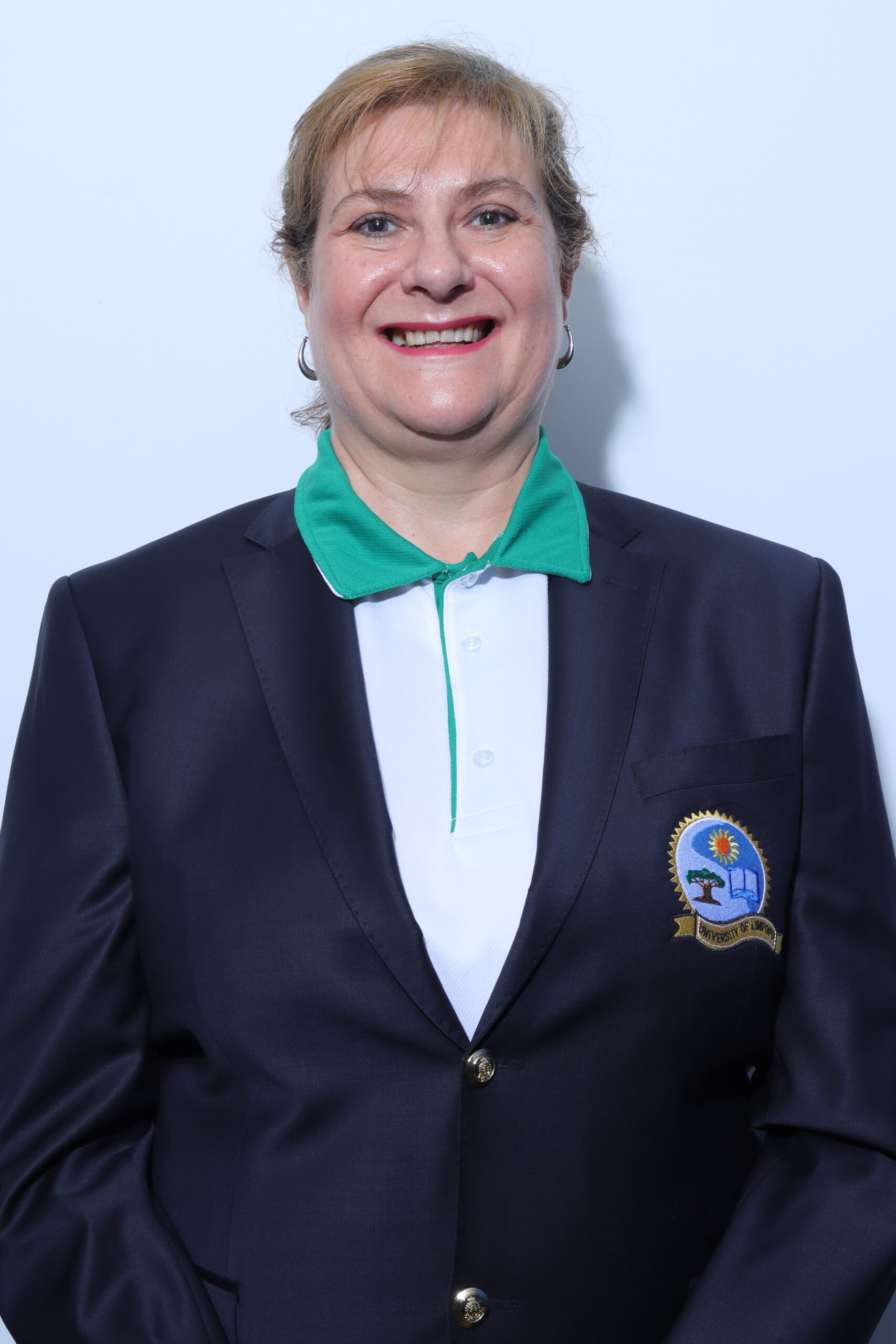
Professor Marlise van Staden

Prof MA Bopape


Prof OS Sibanda
Professor Omphemetse S. Sibanda is an inaugurated Professor of Law with vast leadership and management experience in higher learning institutions (in different roles including Head of Department, Director of School, Executive Dean, and Faculty Research Professor). A former Extra-Ordinary Professor at the North-West University (NWU) in South Africa, Prof Sibanda holds Doctor of Laws degree from the same institution; an LLM degree from the Georgetown University Law Center (USA), where he was a visiting professor between 1998 and 1999, and became part of the leadership of an organisation called Foreign Lawyers at Georgetown (FLAG); BJURIS and LLB (Hons) degrees from Vista University (University of Johannesburg). He is also a member of the International Bar Association and other associations.
Professional Contributions
Prof Sibanda has made numerous contributions to public interest discourse, contributed to some key developments of national importance, and participated in key country-level assignments. For example, he was appointed by the Council on Higher Education as a member of the Standards Development Working Group that, in 2015, crafted the current National LLB Standard for the accreditation of all LLB programmes in the country. Another notable civic duty Prof Sibanda was involved in is the development of the South African Law Commission (Discussion Paper: Project 25 – Statutory Law Revision, 2010), after being appointed in 2008 by the Hon. Ms M.S Mabandla, the then Minister of Justice and Constitutional Development, as part of the advisory committee assisting the South African Law Reform Commission. Further important civic engagements included offering lectures to trainee diplomatic cadet officials of the Republic of South Africa at the Foreign Service Institute (Pretoria) on the different issues of private and public international law and economic diplomacy.
Research, supervision and Publications
Prof Sibanda is a passionate and developed researcher who has presented papers at numerous national and international conferences. He has published more than 60 academic articles and chapters in books, more than 100 (20) articles and opinions in media publications on important national issues. He has been Advisory Board Member of the South African Journal of Judicial Education (SAJEJ) since 2017, a journal that is published under the auspices of the South African Judicial Education Institute based in the Office of the Chief Justice of South Africa. A book he co-authored titled Civil Procedure: A Practical Guide, is one of the foremost books used in the legal profession and by some law faculties in the country and researcher in procedural law.
Over and above responsibilities as the Executive Dean of Faculty of Management and Law, Prof Sibanda remains actively involved in the mentoring and supervision to completion of several postgraduate students, in particular doctoral and master’s students.

Prof. Leseilane Mampuru


Mr JK Moloto
Joseph Kgabo Moloto completed his high school level education at Pax College. He obtained his B Admin and B Admin (Hons) in industrial Pyschology at the University of the North (now University of Limpopo). He completed a two year Advanced Leadership Programme, offered jointly by Grownan and Wits, for CSIR managers and did the Executive Development Programme at Unisa School of Business Leadership (SBL). He completed Management Development Programme (Investor in People) offered by International Labour Organisation Centre in Italy (Turin) and London. He attended training programme in continuous improvement methodologies and Quality improvement in Tokyo, Japan.
Biography
Achievements
Joseph served on the boards of NHBRC and as the independent chairperson of the Remuneration Committee of Sedibeng Water Board. He is a registered member of the Institute of Directors and he is also registered as Chartered Human Resources Practitioner with the South African Board for Personnel Practice, a professional body for human resources practitioners.

Mr VM Kgomoeswana
Currently the Executive Director of Marketing and Communication at the University of Limpopo (UL), Victor Kgomoeswana is a demonstrated professional speaker on African business and economic affairs. He is providing an oversight of over 10 units within the department.
In 2014 and 2015, he plied his notable professional trade as a television and radio anchor and commentator, as well as the producer and presenter of a weekly Africa Business News on CNBC Africa. In the same vein, between 2014 until February 2017, he hosted a daily radio show called Power Hour on Power FM.
These, and many more broadcasting roles, adorned his media experience, which began in 1996 and spans print, radio, television, and interactive media.
More strategically, he has offered sound African business advisory and investment services to multinational corporations through his company – Africa is Open for Business – as a director since late 2013. The company, among others, organises conferences and trade missions on African business and economic issues, and advises multinationals on stakeholder relations and business expansion into the rest of the African continent.
In 2012, he joined PPC Ltd – a cement manufacturing company listed on the Johannesburg Stock Exchange – as Business Development Executive. His responsibilities included identifying investment growth opportunities across the African continent and helping the company in establishing a presence in Rwanda and the Democratic Republic of the Congo (DRC). His significant experience in government relations and economic diplomacy came in helpful for this role. He represented the company at various conferences and trade missions in Ethiopia, Sudan, Cameroon, the DRC, Gabon, Ghana, Zimbabwe, and Botswana, among other places, and coordinated its internal multidisciplinary teams during the initial stages of mergers and acquisitions transactions.
He later became the Chief Executive Officer of the enterprise’s development initiative, PPC Ntsika Fund, and served until January 2014. During his stint as CEO, he primarily focused on supply chain and procurement, as well as collaborating with finance departments to provide finance, mentorship, coaching, and other forms of support to black small and medium-sized businesses.
Prior to joining PPC, he was an Associate Director at Ernst & Young’s (EY) Africa Business Centre since October 2009, where he headed a team that created the firm’s database, today known as Africa Interactive and Growing Beyond Borders. This tool was a first in the industry for the Big Four globally. Following its launch in April 2010, his responsibilities evolved to include business development, supporting pursuit teams across EY practices in 30 African countries and globally, presenting to clients on African business opportunities, locating investment opportunities, and matching them to clients. He also represented the firm at key international conferences such as the World Economic Forum (Africa), Mining Indaba, the Africa Tax Conference, the Africa Mobility Conference, and the Africa Investment Conference (UK), as well as assisting clients in identifying investment opportunities – primarily multinational corporations based in South Africa, India, Europe, the United States, and China.

