


Final-year Agricultural Economics student Lethabo Monareng says the session gave her clarity on career navigation and inspired her to pursue further studies and gain more knowledge from industry experts.
By Isaack Duba – ulpublications@.ul.ac.za
As South Africa’s agricultural sector evolves to meet the demands of a changing economy, the University of Limpopo (UL) is positioning its students at the forefront of this transformation
The University’s Department of Agricultural Economics and Animal Production recently launched an initiative titled, “Bridging the Gap Between University Agricultural Students and Industry”. This dynamic engagement brought together students, academics, and industry leaders.
The event served as a practical bridge between classroom learning and real-world agricultural practices, equipping students with valuable insights, professional networks, and industry awareness needed to navigate and contribute to a rapidly changing sector.
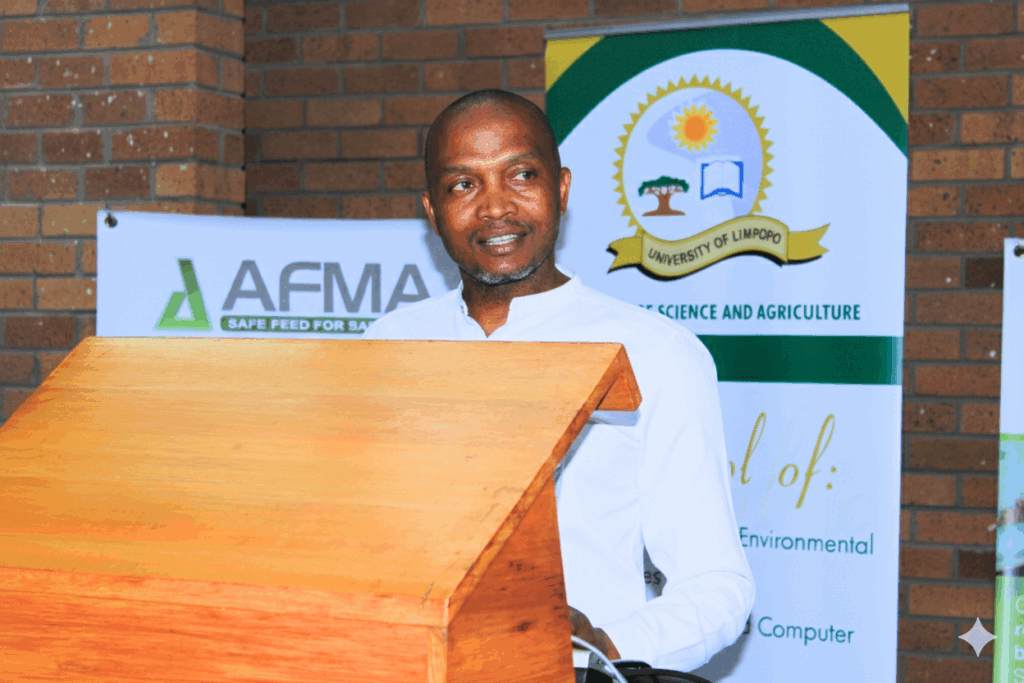
Professor Paulus Mafeo, Director of the School of Agriculture and Environmental Sciences at UL, advocates for a curriculum that integrates theory, practical experience, and management skills. Photos: Linah Raphela
Professor Paulus Mafeo, Director of the School of Agriculture and Environmental Sciences, emphasised the importance of aligning university curricula with industry realities.
“The university cannot function in isolation,” he stated. “We must close the gap between what is taught in class and what happens in the field. Strong collaboration between academia and industry is essential.”
Prof Mafeo further advocated for a balanced curriculum that integrates theory, hands-on learning, and management skills.
“We need to ensure that agricultural students’ training consists of 30% theory, 50% practical work, and 20% management skills. This blend will keep our programmes relevant and help us address the sector’s challenges effectively.”

Dr Lucius Phaleng, Trade Advisor at the Animal Feed Manufacturers Association (AFMA), encourages students to connect the dots and stay informed about global agricultural trends.
Delivering the keynote address, Dr Lucius Phaleng, Trade Advisor at the Animal Feed Manufacturers Association (AFMA), urged students to connect their academic learning with global agricultural realities.
“Agricultural students must understand how trade wars, tariff increases, and import bans affect our sector,” he stressed. “Being informed about these dynamics is crucial, especially for agricultural economics students who will shape South Africa’s agricultural policy and trade future.”
Dr Phaleng also challenged students to think creatively about South Africa’s food security.
“We are not self-sufficient in producing staple foods like rice,” he noted. “Solutions to such challenges will come from today’s students, through engagement, innovation, and collaboration with key stakeholders.”
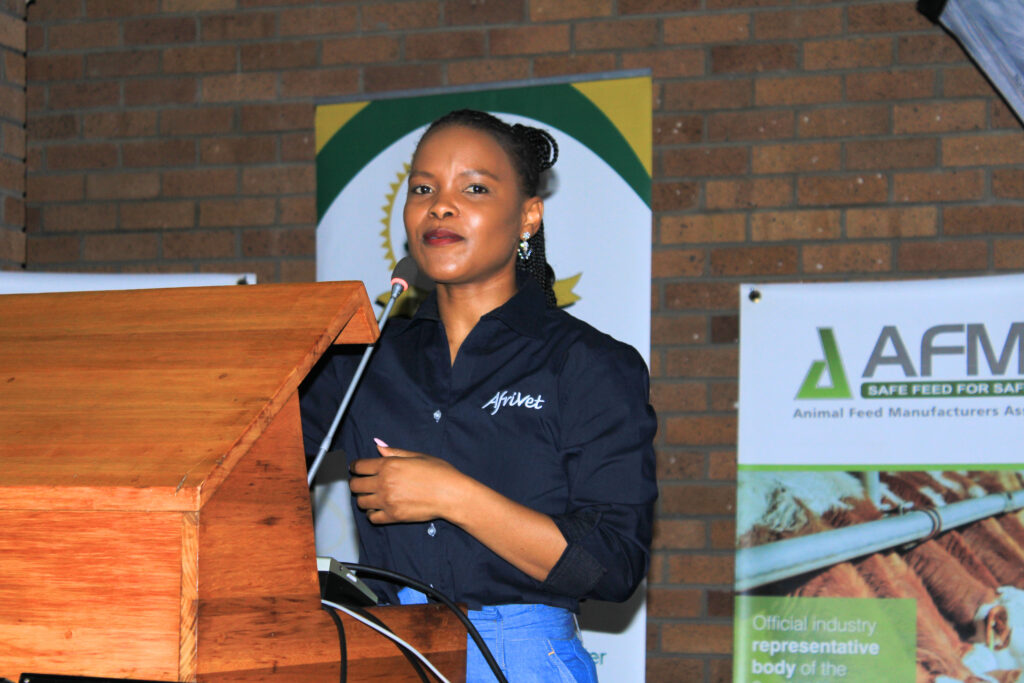
Dr Sipokazi Nyeleka, Learnership and Operations Manager at Afrivet, emphasises the importance of engaging with relevant stakeholders while learning the organisational culture and fostering policy implementation.
Adding a practical career perspective, Dr Sipokazi Nyeleka, Coastal Sales Manager at AFRIVET, encouraged students to value experience over titles.
“The experience you gain at entry level prepares you for leadership,” she advised. “Don’t limit yourself by your qualifications, focus on building practical skills, engaging with communities, and understanding the culture of the organisations you join.”
She also underscored the importance of lifelong learning and active participation in industry events to expand networks and remain relevant.
For many students, the event proved transformative. Lethabo Monareng, a final-year Bachelor of Agricultural Economics student, expressed gratitude for the opportunity.
“The session gave me a clear understanding of how to navigate my career and inspired me to pursue further studies and internships,” she said. “Dr Nyeleka’s advice about embracing entry-level positions really resonated with me.”