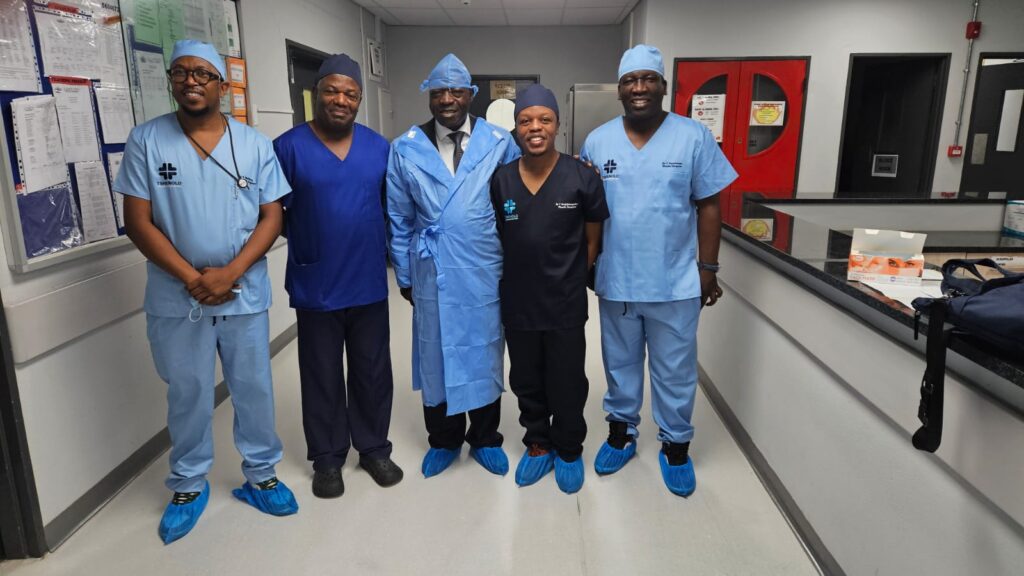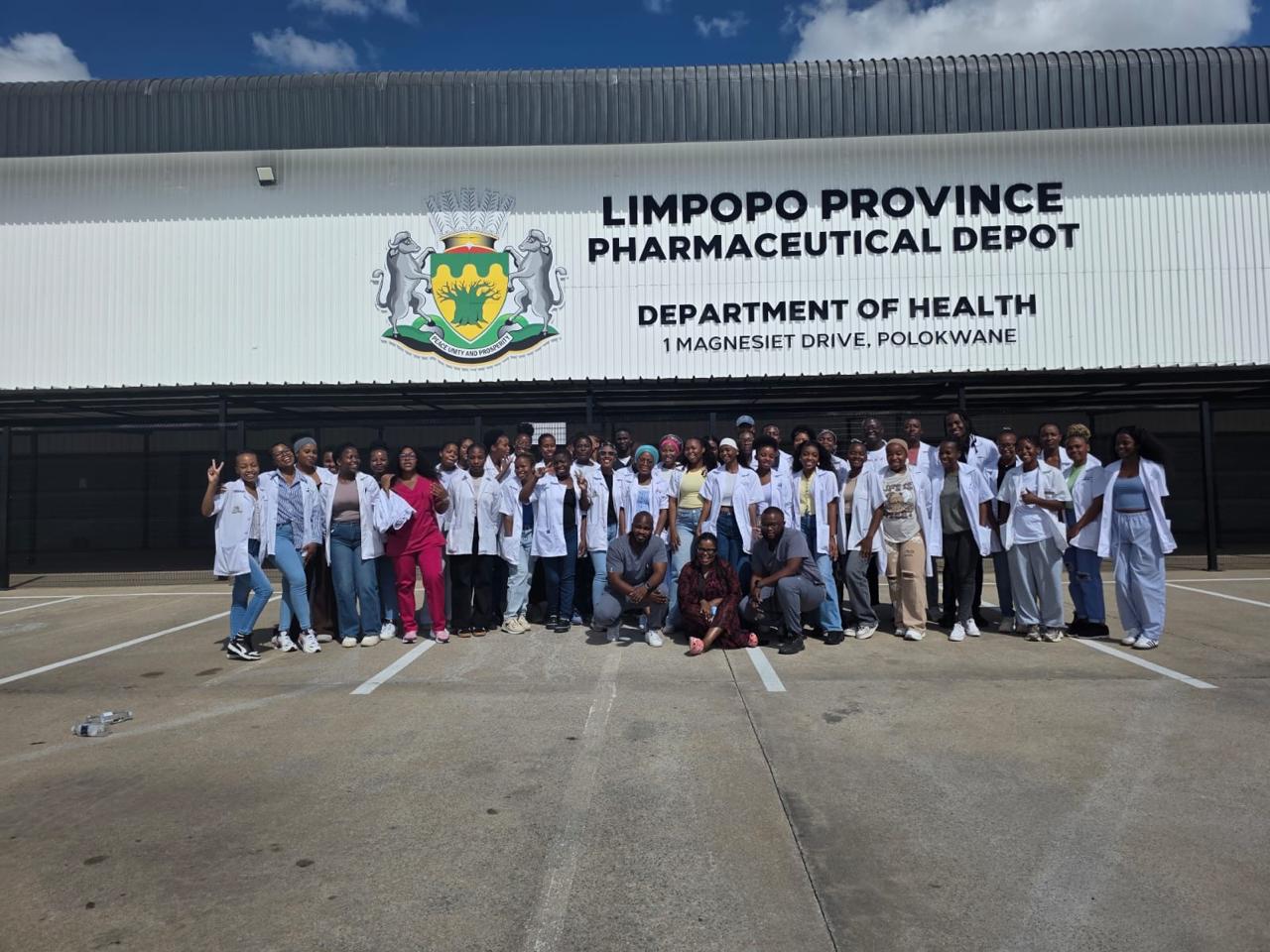
The University of Limpopo’s School of Medicine continues to benefit from the Limpopo Provincial Government’s support through the Department of Health in training medical doctors for the province and beyond.
Ten years after admitting its first students, the University of Limpopo’s School of Medicine is transforming healthcare by producing doctors, specialists and researchers committed to serving rural and underserved communities
By Johannes Selepe – Mosela.selepe@ul.ac.za
A decade after opening its doors, the University of Limpopo’s School of Medicine has emerged as one of South Africa’s most significant investments in strengthening healthcare in rural communities
Established in 2016, the school has already produced 255 medical doctors, many of whom are now serving in public hospitals and clinics across Limpopo and other provinces, helping to reduce the longstanding shortage of healthcare professionals.
The journey began with the admission of its inaugural cohort of 60 Bachelor of Medicine and Bachelor of Surgery (MBChB) students, selected from more than 1,000 applicants. Since then, the programme has continued to grow, with the annual intake increasing to 80 first-year students in 2025, further expanding the pipeline of locally trained doctors.
The school occupies a unique place in South Africa’s higher education landscape. It is not only Limpopo’s only medical school, but also the first medical school established in democratic South Africa, creating new opportunities for talented young people, particularly those from rural and underserved communities, to pursue careers in medicine.
The school celebrated its first graduating class in 2022, when 47 newly qualified doctors completed their medical training. At the university’s 2026 Autumn Graduation Ceremony, a further 56 doctors graduated, bringing the total number of UL-trained medical practitioners to 255 in just ten years.

Director of the School of Medicine, Professor Shisana Baloyi, says the School was established to increase access to medical education and address South Africa’s shortage of doctors.
According to the Director of the School of Medicine, Professor Shisana Baloyi, the School was founded to improve access to quality medical education while addressing South Africa’s critical shortage of healthcare professionals.
“Our mission has always been to train competent, ethical and compassionate doctors who understand the healthcare challenges facing South Africa, particularly those experienced by rural and underserved communities,” said Professor Baloyi.
While undergraduate medical education remains its cornerstone, the school has rapidly developed into an important centre for postgraduate training, specialist education and health research.
To date, the school has produced more than 25 medical specialists, approximately 70 master’s graduates in Public Health, 70 PhD graduates, and three MSc graduates specialising in Public Health, contributing significantly to the country’s growing academic and healthcare workforce.
Professor Baloyi believes that the school’s greatest achievement is measured not simply by the number of graduates, but by the impact they have on patients and communities.
“It is easy to focus on the numbers, but our greatest achievement is producing healthcare professionals who are making a tangible difference in people’s lives every day.”
He noted that patients who previously had to travel to tertiary hospitals outside the province for specialised care can now receive advanced treatment much closer to home.
“Patients who previously had to be referred to tertiary hospitals in Gauteng are now treated here in Limpopo by our own specialists.”
The school has also made remarkable progress in specialist training. Of its 23 academic departments, 21 are accredited by the Health Professions Council of South Africa (HPCSA) to train medical specialists, positioning UL among South Africa’s leading centres for specialist medical education.
One of the most visible demonstrations of this growing clinical expertise was the successful separation of conjoined twins at Mankweng Hospital in 2026, a landmark procedure that highlighted the advanced surgical capabilities now available within the province.
“That is the benefit of having a medical school in Limpopo. Our specialists are providing advanced care that was previously unavailable in the province.”
Through strong partnerships with the Limpopo Department of Health, public hospitals and healthcare facilities across the province, the school has established an extensive clinical training platform that enables students to gain practical experience while strengthening service delivery in the public health sector.
Professor Baloyi attributes the school’s success to sustained collaboration between government, healthcare institutions, academic staff and clinical partners who share a common commitment to improving healthcare outcomes.
“Our specialists are providing advanced care that was previously unavailable in the province.”
School of Medicine at a Glance
● Established: 2016
● First MBChB intake: 60 students (selected from more than 1,000 applicants)
● Current annual MBChB intake: 80 students
● Medical doctors graduated thus far: 255
● First graduating class: 2022 (47 doctors)
● Academic departments: 23
● Departments accredited for specialist training: 21
● Clinical training platform: Public hospitals and healthcare facilities across Limpopo