


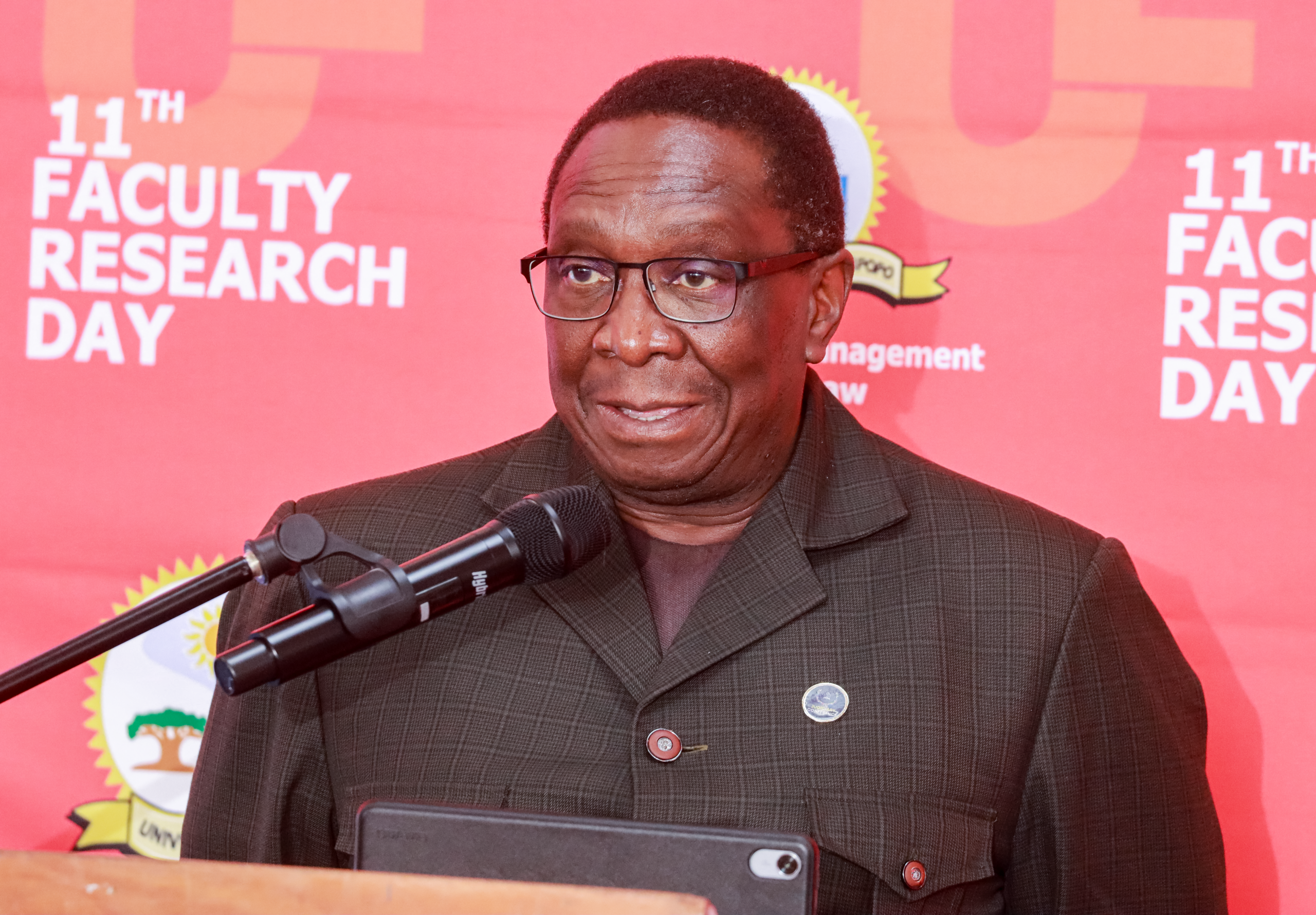
Deputy Chief Justice of South Africa, Justice Dunstan Mlambo.
Faculty of Management and Law Research Day challenges academics and students to turn evidence into action and tackle real-world problems
By Johannes Selepe & Lesego Maaba – Mosela.selepe@ul.ac.za
Research should not end when findings are published but should lead to changes in policy, institutions and communities, Deputy Chief Justice Dustan Mlambo has told researchers and students at the University of Limpopo (UL)
Justice Mlambo was speaking as a keynote speaker at the Faculty of Management and Law’s 11th Research Day. The annual event brings together students to present their research, while academics and emerging researchers provide constructive feedback, engage with the research findings and support students in strengthening the quality and relevance of their work.
The UL alumnus, who graduated with a law degree from the university during its turbulent years, challenged student researchers to take their findings beyond the academic environment and consider the impact of their work.
“After your research is published, did an institution alter its practice? Did a community acquire useful knowledge? Did the policy improve? If not, what blocked the path from evidence to action?” Justice Mlambo asked.
He said researchers should remain interested in what happens to their ideas after publication.
“As a researcher, you should ask yourself what has changed since you published the research findings,” he said.

From left: Deputy Chief Justice of South Africa, Justice Dunstan Mlambo; Executive Dean of the Faculty of Management and Law, Professor Omphemetse Sibanda; and Judge President of the Limpopo Division of the High Court, Judge George Phatudi, listen to research papers presented by students during the Faculty of Management and Law’s 11th Research Day.
Justice Mlambo said research played an important role in strengthening governance, innovation and ethical leadership.
“Research gives governance eyes. It gives innovation ideas and ethical leadership the courage to confront challenges,” he said.
He also commended the quality of some of the research papers presented during the event, saying they were of a high standard and that some of the ideas would be discussed in Geneva in September during the UN Human Rights Council session.

Prof Tlou Setati, a Research Professor in the Faculty of Management and Law.
Prof Tlou Setati, a Research Professor in the Faculty of Management and Law, said the annual event had become an important platform for developing students and emerging researchers while creating space for the exchange of ideas.
“Research Day is a platform through which we celebrate research and develop our students and emerging researchers, exchange ideas and create opportunities to contribute to the challenges facing our society,” Prof Setati said.
He pointed to the growing number of students participating in the event as evidence that research was becoming part of the faculty’s culture.
“In 2021, we had 30 students participating, while in 2026 we had 148. This growth tells an important story. It tells a story that Research Day is a culture embedded in our faculty,” he said.
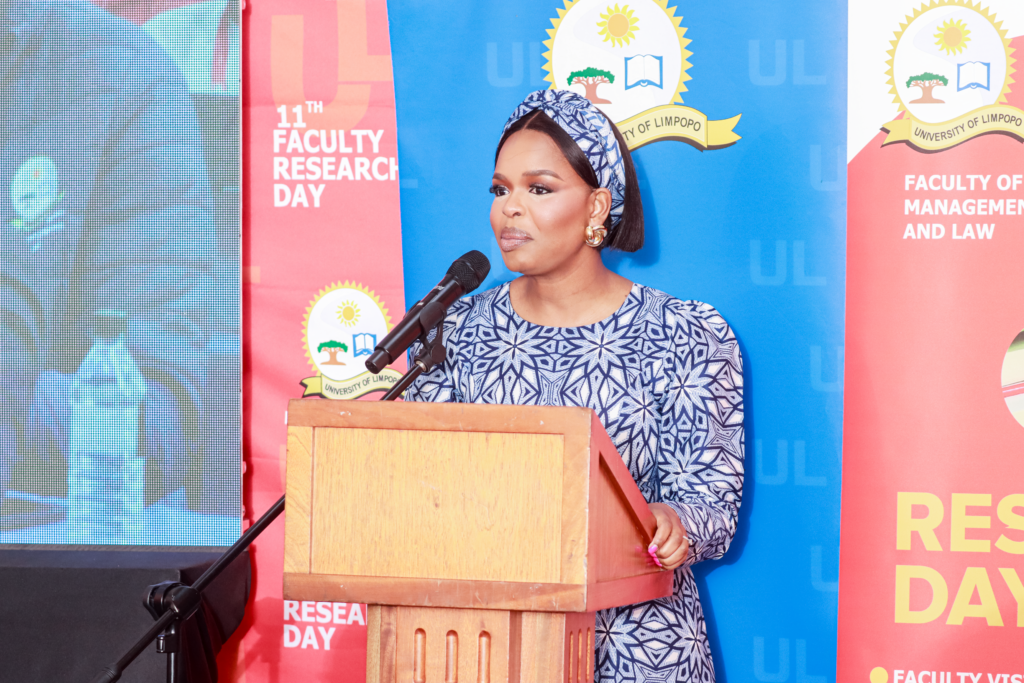
Queen Neo Mopeli, a commissioner at the Presidential Climate Commission.
Another keynote speaker, Queen Neo Mopeli, a Commissioner at the Presidential Climate Commission, emphasised that good governance should be measured by the consequences of decisions and their effect on communities. She highlighted how research could assist in providing for informed decisions at a governance level.
She called for leadership that prioritises accountability, justice and the needs of communities, while stressing the importance of inclusive innovation, responsible use of technology and climate action.
Queen Mopeli emphasised that climate-related decisions should consider how they affect workers, communities, young people and women.
“It is through research that inputs from communities can be solicited to inform decisions on sustainable development,” she stated.
She also challenged students and researchers to see themselves as leaders of today, emphasising that they should use their research to influence policy, drive institutional reform and develop practical solutions to challenges facing society. “Do not wait for the future. Build it today,” Queen Mopeli told the students.
She urged researchers to consider who would use their findings, which decisions their research could improve and whose lives could be changed as a result.
“As a researcher, you should ask yourself what has changed since you published the research findings.”
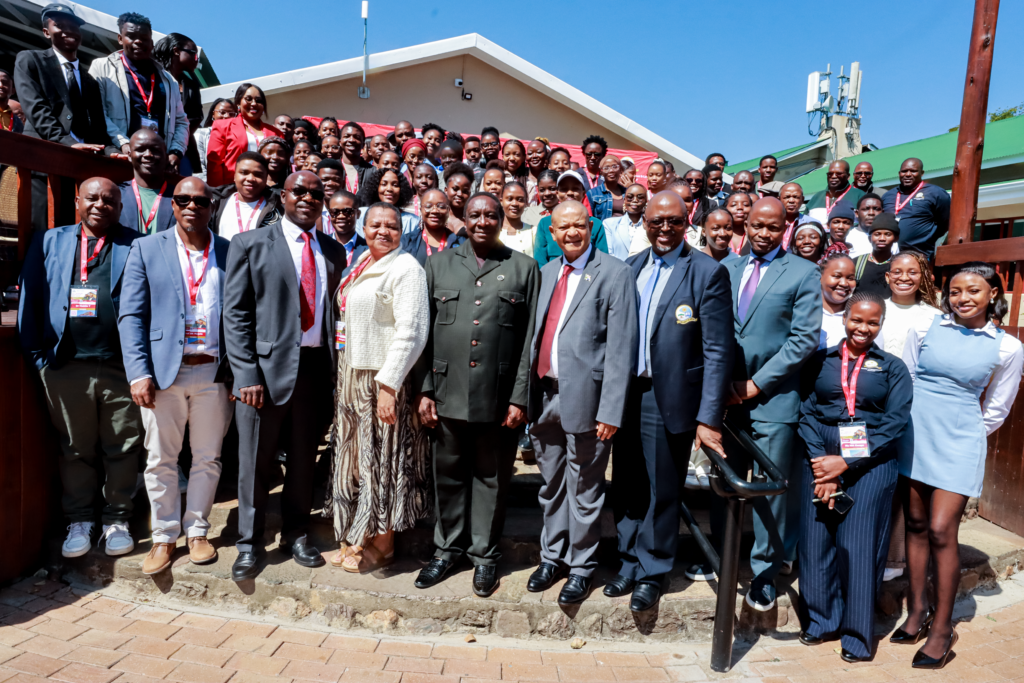
Academic leaders, members of executive management, Deputy Chief Justice, and students meet to discuss governance, innovation and ethical leadership for sustainable development in a changing Africa during the Faculty of Management and Law’s Research Day.