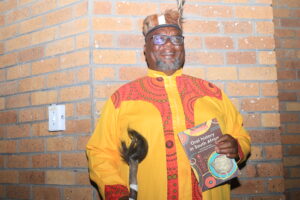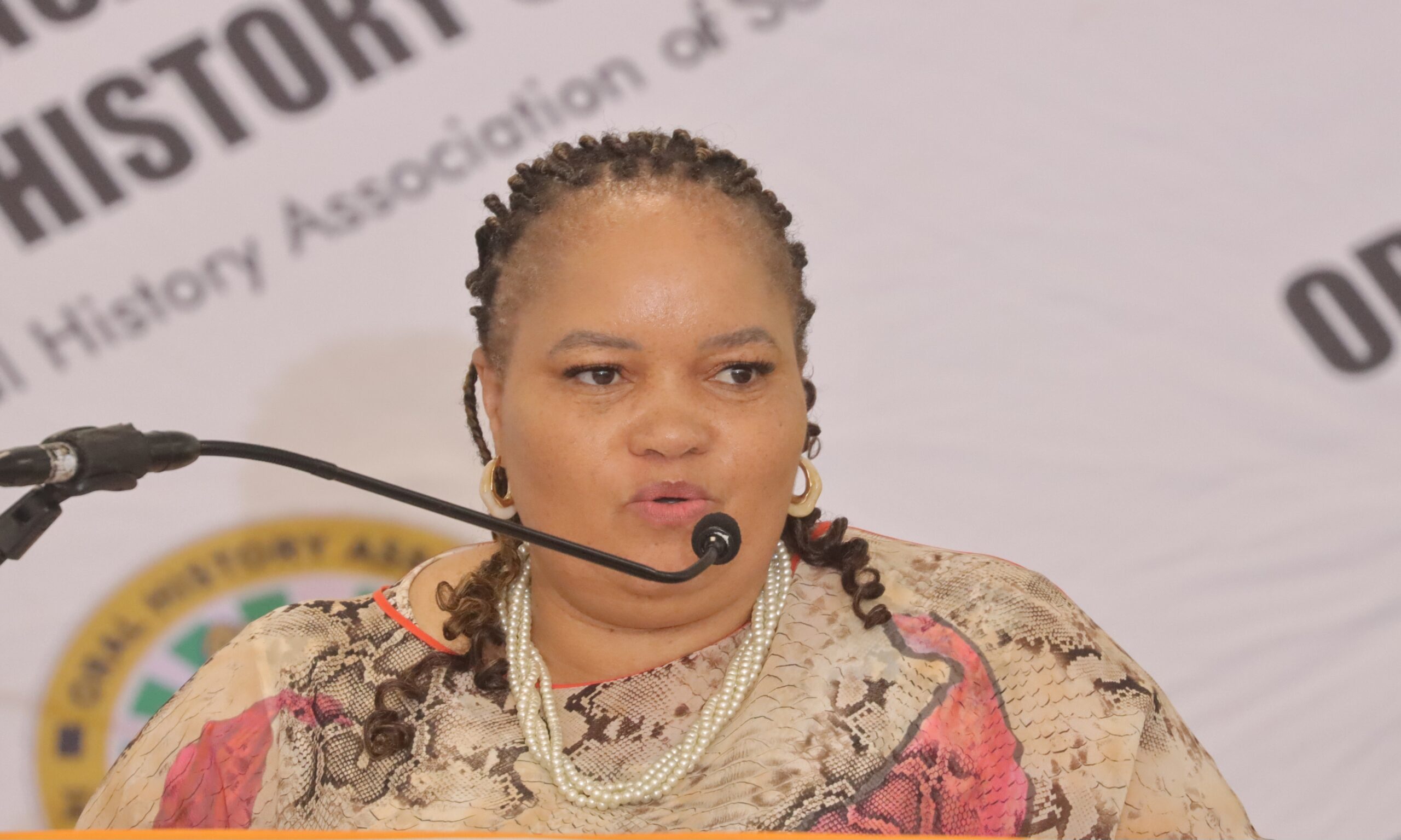
Hon Peace Mabe, Deputy Minister of Sport, Arts and Culture, says that Limpopo holds a rich cultural history, yet much of it remains undocumented, untold, and unarchived. Photos: Frans Nkhapele
Sipho Zulu, President of OHASA, emphasises the urgent need to document and share knowledge in historically marginalised languages to reshape South Africa’s historical narrative.
Hon Jerry Maseko, Limpopo MEC for Sport, Arts and Culture, underscores the importance of collaboration in preserving language and cultural heritage.
By Isaack Duba – ulpublications@.ac.za
The University of Limpopo (UL) played a pivotal role in preserving Africa’s storytelling traditions by hosting the 22nd Annual National Oral History Conference in collaboration with the National Archives and Records Service of South Africa (NARSSA) and the Oral History Association of South Africa (OHASA)
Under the theme “Oral History, Untold Stories and Living Archives: Pursuance of Relentless Struggles for Human Dignity”, this four-day event celebrated Africa’s oral legacies and featured the launch of Oral History in South Africa: Auto-ethnography, Methodologies and Ethics, authored by Prof Sekgothe Mokgoatšana from UL’s Department of Cultural and Political Studies.
The conference served as a platform to reflect on, document, and preserve the lived experiences of historically marginalised communities. Delegates discussed strategies for safeguarding public and private records of enduring cultural significance and explored how oral history can enhance archives, indigenous knowledge systems, and education through local narratives.
During her keynote address, Hon Peace Mabe, Deputy Minister of Sport, Arts and Culture, commended UL for its evolution into a hub of academic and cultural development.
“Limpopo is the cradle of humankind, the ancient history that defines this country,” she stated. “Much of that history remains undocumented. We must preserve our stories and knowledge for future generations.”
Hon Mabe emphasised the importance of supporting emerging writers, academics, and learners to make archives dynamic educational resources that contribute to South Africa’s collective narrative.
In his speech, Hon Jerry Maseko, Limpopo MEC for Sport, Arts and Culture, highlighted the need for collaboration among government, traditional leaders, and cultural institutions to safeguard language and heritage.
“The efforts of archivists, oral historians, educators, and elders must be preserved and protected. This is essential for redefining our nation’s story,” he remarked.
Sipho Zulu, President of OHASA, encouraged participants to leverage technology, particularly social media and artificial intelligence (AI), to advance oral history.
“If we produce and share content in indigenous languages online, AI will help preserve it for future generations,” he noted.