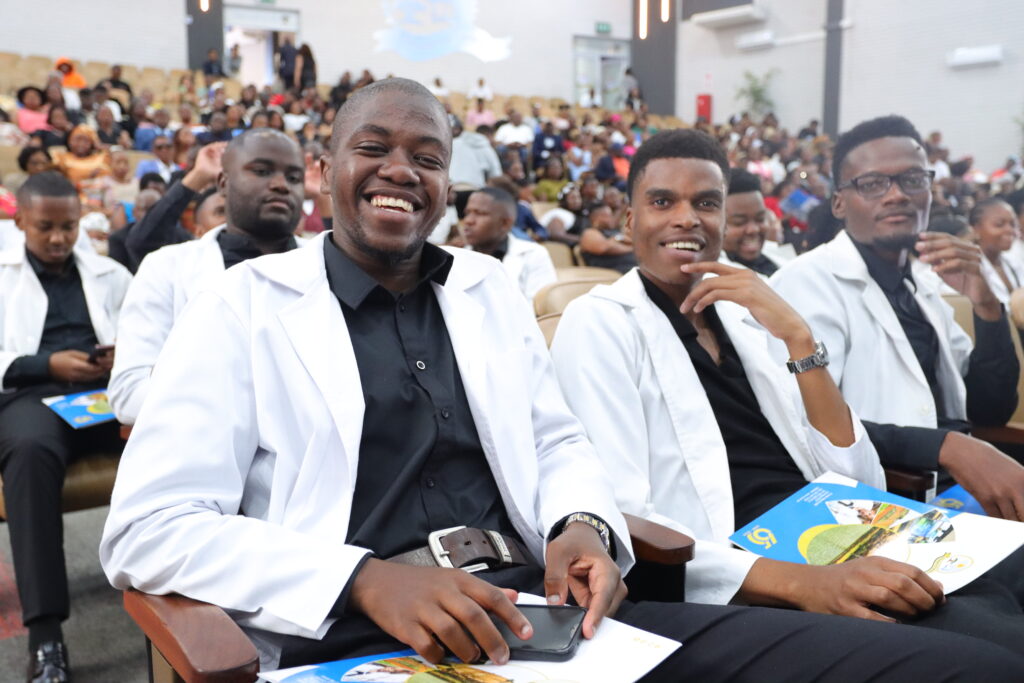
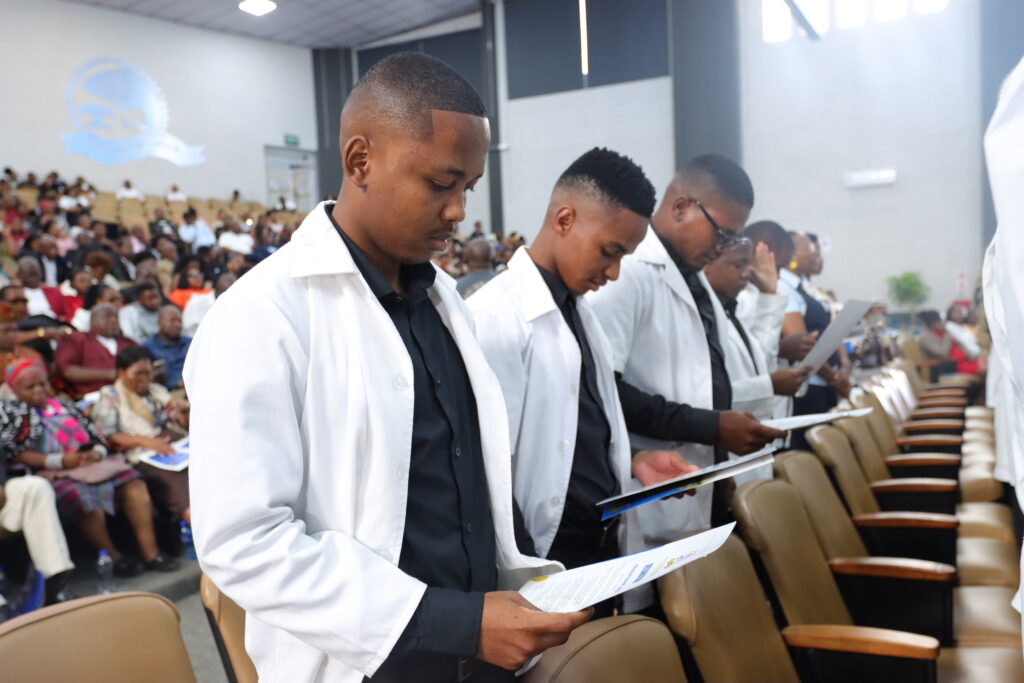
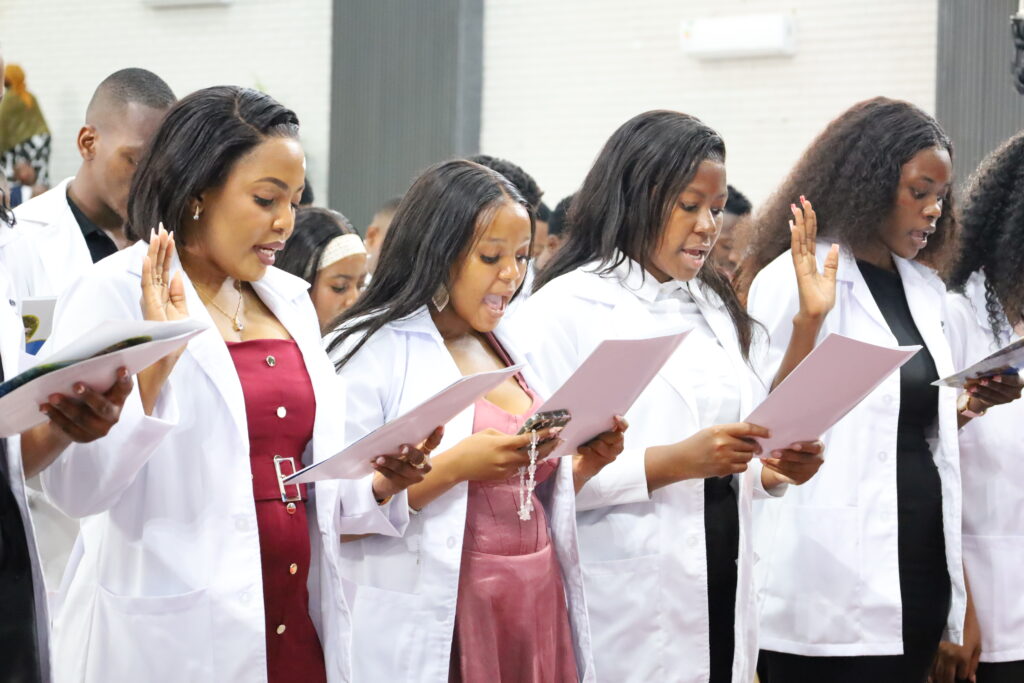
Since 2022, UL has produced 202 medical doctors, strengthening South Africa’s healthcare system. Photos: Frans Nkhapele & Malatji Monyelegwete
By Hunadi Motlhala – ulpublications@ul.ac.za
The University of Limpopo (UL) is playing a vital role in addressing South Africa’s urgent need for medical doctors amid ongoing healthcare shortages and an overstretched public health system
Since 2022, UL has produced 202 medical doctors, significantly bolstering the national healthcare workforce at a time when qualified practitioners are desperately needed. This achievement builds on UL’s legacy, which began in 2016, when it became the first university post-apartheid to open a medical school, enrolling its first class of 60 students.
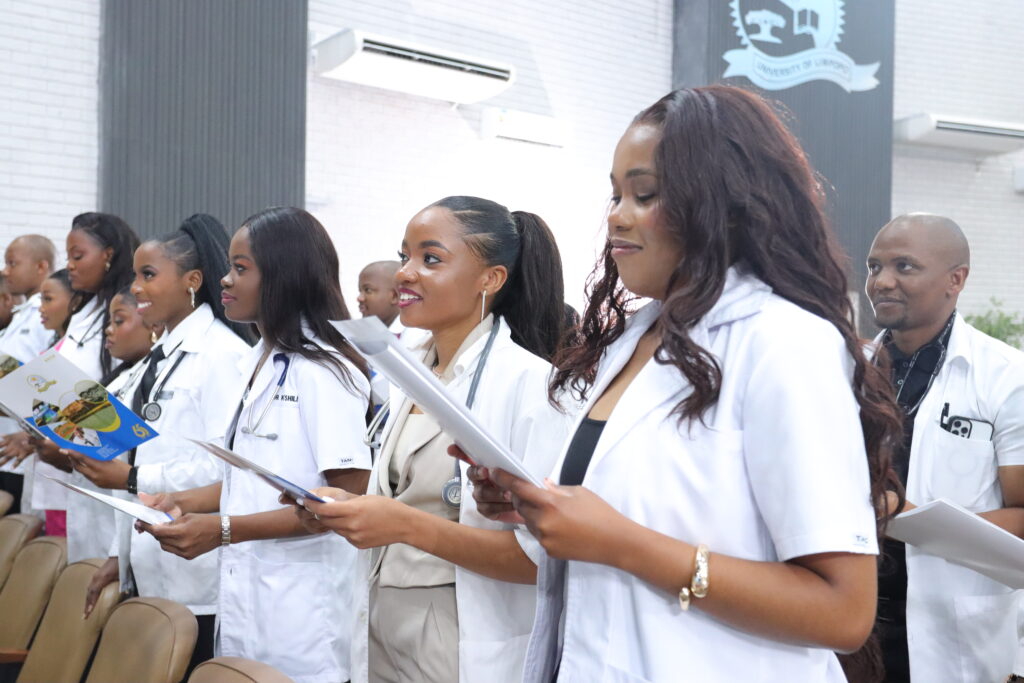
Fifty-six MBChB students from the University of Limpopo take the Oath of Service, committing themselves to ethical practice, compassion and accountability as newly qualified medical doctors.
This year, the Class of 2025 has added 56 newly qualified doctors to the healthcare system after completing the six-year Bachelor of Medicine and Bachelor of Surgery (MBChB) programme and taking the oath of service—a commitment grounded in compassion, accountability, ethics, and respect for human dignity.
Newly qualified medical doctors must complete a compulsory 24-month internship at an accredited public health facility before they can register for community service and eventually practice independently.
The 2025 cohort follows earlier classes since UL began producing MBChB graduates:
- 2022: 47 doctors
- 2023: 49 doctors
- 2024: 50 doctors
- 2025: 56 doctors
Among the newly qualified doctors is Nothando Mhlanga, the top MBChB student from Bergville, KwaZulu-Natal, who received several accolades, including Best Student in Family Medicine and Overall Best Student in the Faculty of Health Sciences.
Having grown up in a rural area with limited access to healthcare, Mhlanga emphasised the responsibility that comes with the profession.
“Being a healthcare professional is not just about knowledge and skills. It is about integrity, accountability, and respect for human dignity. I want to help restore trust, hope, and dignity in public healthcare.”
Another graduate, Dakalo Mantshimuli from Shayandima in Thohoyandou, noted that communities expect more than just clinical expertise.
“Communities expect healthcare professionals to be clinically competent, ethical, and compassionate. Taking this oath reminds me that being a doctor is not just a job, but a commitment to integrity, continuous learning, and prioritising patients’ well-being.”
David Boshego from Atok in Ga-Sekhukhune echoed similar sentiments, highlighting UL’s strong preparation for real-world health challenges.
“South Africa faces many health challenges, and communities expect us to provide healthcare services with respect and empathy. With the high-quality training we received at UL, we are ready to help reduce the disease burden in our country.”
The 2025 oath-taking ceremony also included final-year students from other Health Sciences disciplines, who will contribute to various aspects of the national health system:
- 75 Bachelor of Pharmacy
- 60 Bachelor of Nursing Sciences
- 46 Bachelor of Optometry
- 36 Bachelor of Science in Medical Sciences
- 34 Bachelor of Science in Dietetics
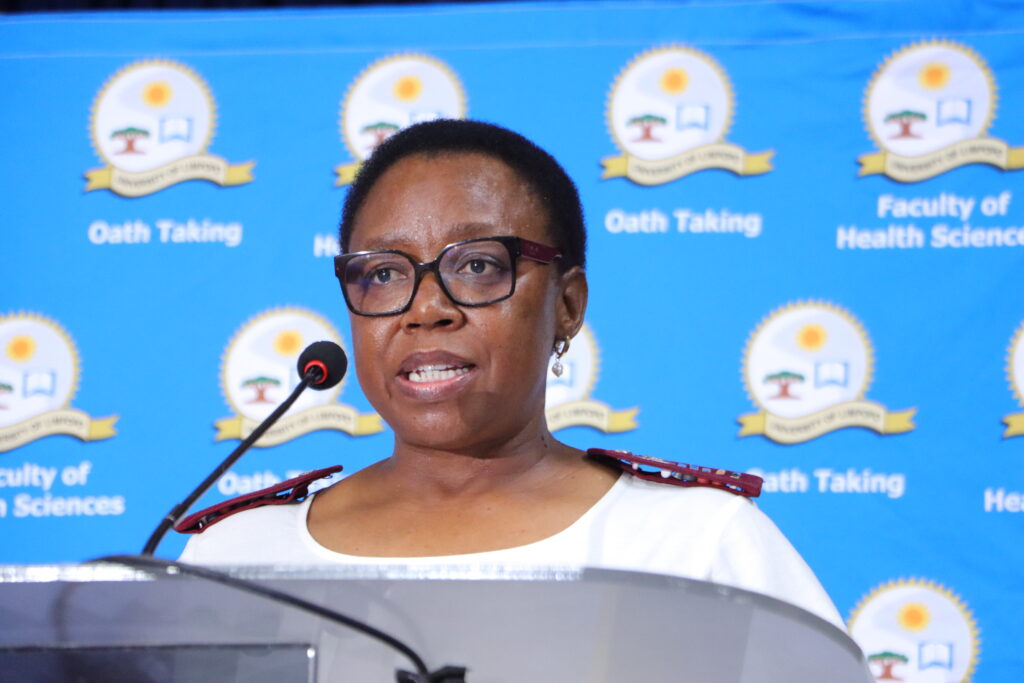
Professor Mamare Bopape, Acting Executive Dean of the Faculty of Health Sciences at UL, emphasised the importance of UL’s contribution to the country’s health workforce.
“Sending more doctors into the healthcare system strengthens patient care and improves the sector. This oath represents a significant milestone, uniting Health Sciences students across disciplines through a shared commitment to healing, serving and upholding human dignity.”
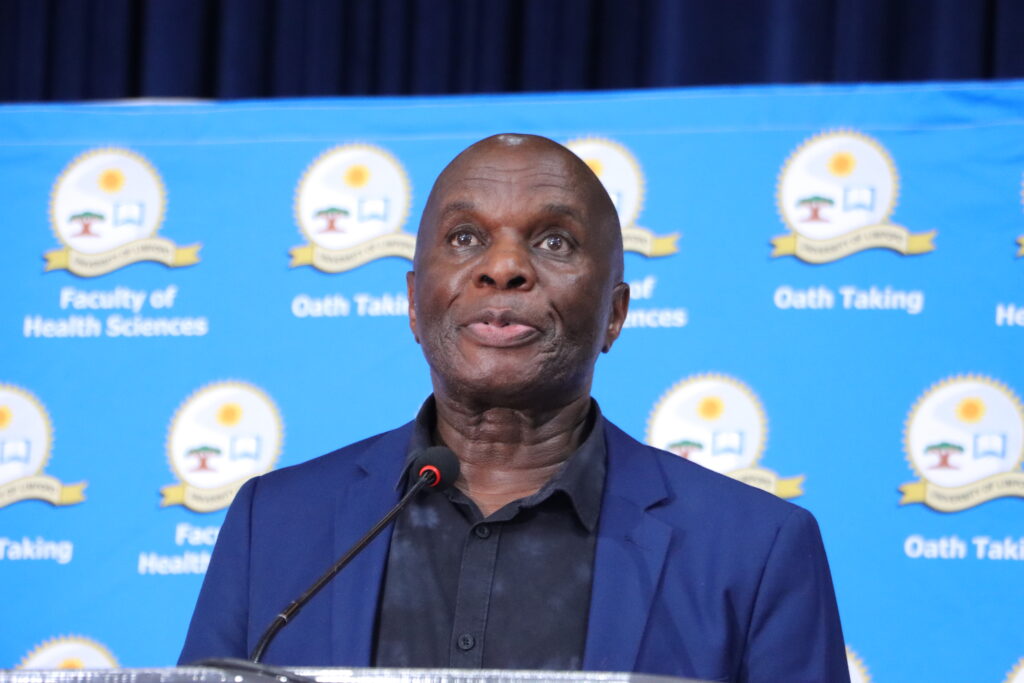
Professor Richard Madadzhe, Deputy Vice-Chancellor for Teaching and Learning at UL, commended the graduates for meeting the rigorous academic and clinical standards of their programmes, stressing the urgent need for more skilled medical professionals in South Africa.
“South Africa requires highly trained, ethical medical professionals to support a healthcare system under immense pressure. UL is proud to make a meaningful contribution to this national priority.”
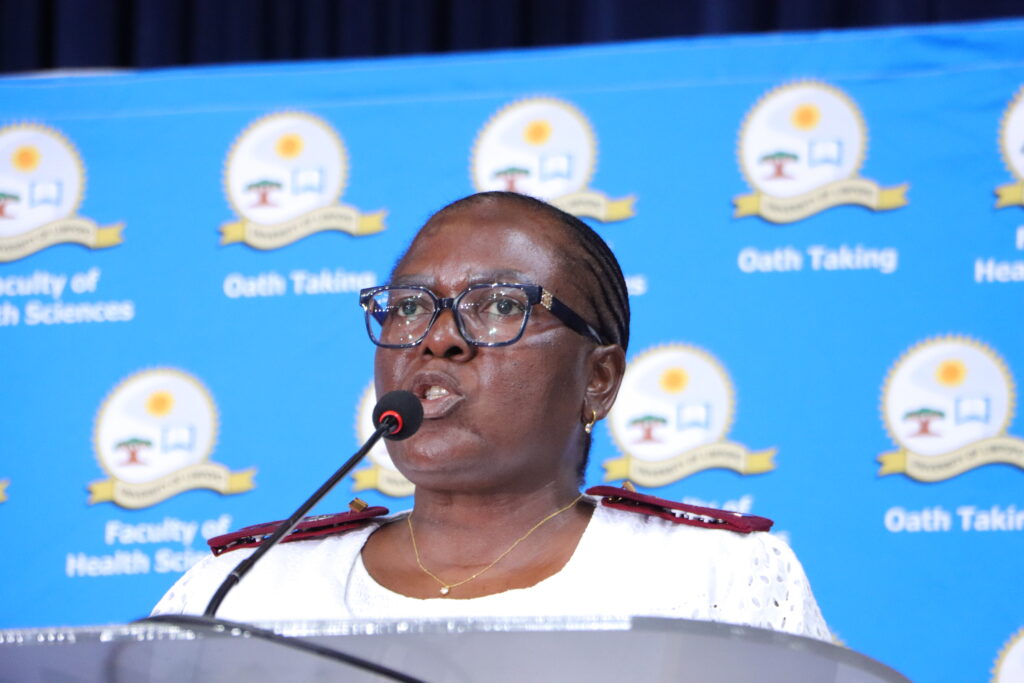
Professor Tebogo Mothiba, Acting Deputy Vice-Chancellor for Research, Innovation and Partnerships at UL, reminded graduates of the core of the health professions.
“Competence makes you employable, but ethics makes you transformative. Knowledge enables service, but integrity sustains it.”